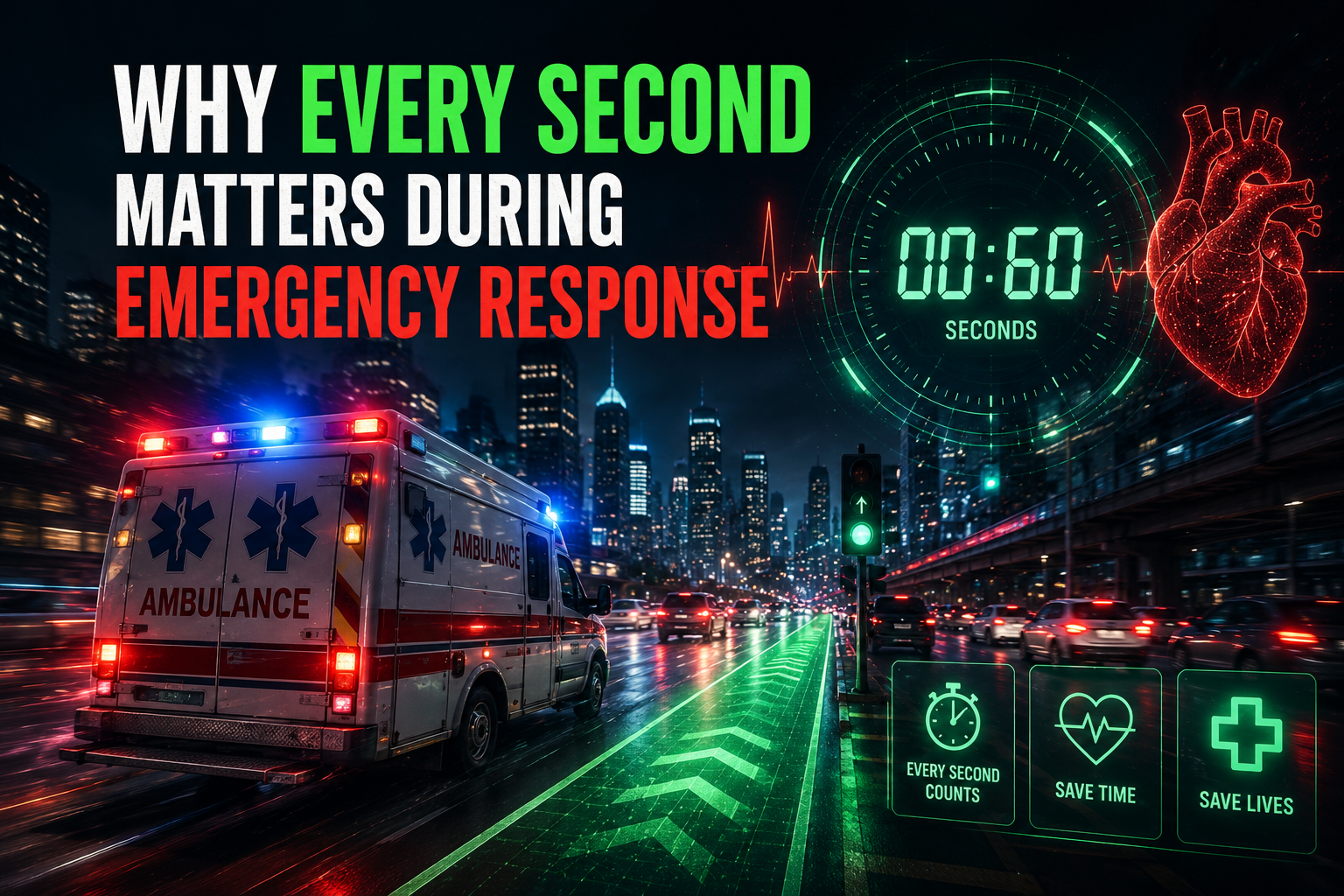
When an emergency vehicle is delayed in traffic, the consequences are not measured in minutes — they are measured in lives.
Across modern cities, ambulances, fire trucks, and emergency responders face increasing delays caused by congestion, poorly coordinated intersections, and outdated traffic systems. During cardiac arrests, trauma incidents, or fires, even a small delay can drastically reduce survival outcomes.
The World Health Organization states that post-crash emergency care is "extremely time-sensitive," and delays of only minutes can determine life or death outcomes. Urban congestion has amplified this challenge enormously.
What Emergency Vehicles Face Every Day
- Congested intersections
- Delayed signal changes
- Blocked lanes
- Poor route coordination
- Slow response synchronization
Studies on emergency response systems show that traffic signal preemption can reduce emergency response times by 14–23%, saving roughly 70 seconds per route across signalized intersections.
The Golden Window
For stroke victims, trauma patients, or cardiac arrest cases, the first few minutes are often called the "golden window" — the critical period where rapid medical intervention significantly improves outcomes.
Traditional traffic infrastructure was never designed for modern emergency mobility. Most intersections still operate on static timing systems, unable to adapt dynamically when emergency vehicles approach. This creates unnecessary stopping, delays, and risk during life-critical moments.
The Path Forward
At Greenwave TechLabs, we believe intelligent infrastructure must prioritize human life first. That is why modern emergency mobility systems are evolving toward:
- Real-time traffic coordination
- Vehicle-to-Infrastructure communication
- AI-powered emergency detection
- Smart signal preemption
- Dynamic green-wave corridors
Because during an emergency, every second becomes critical infrastructure.