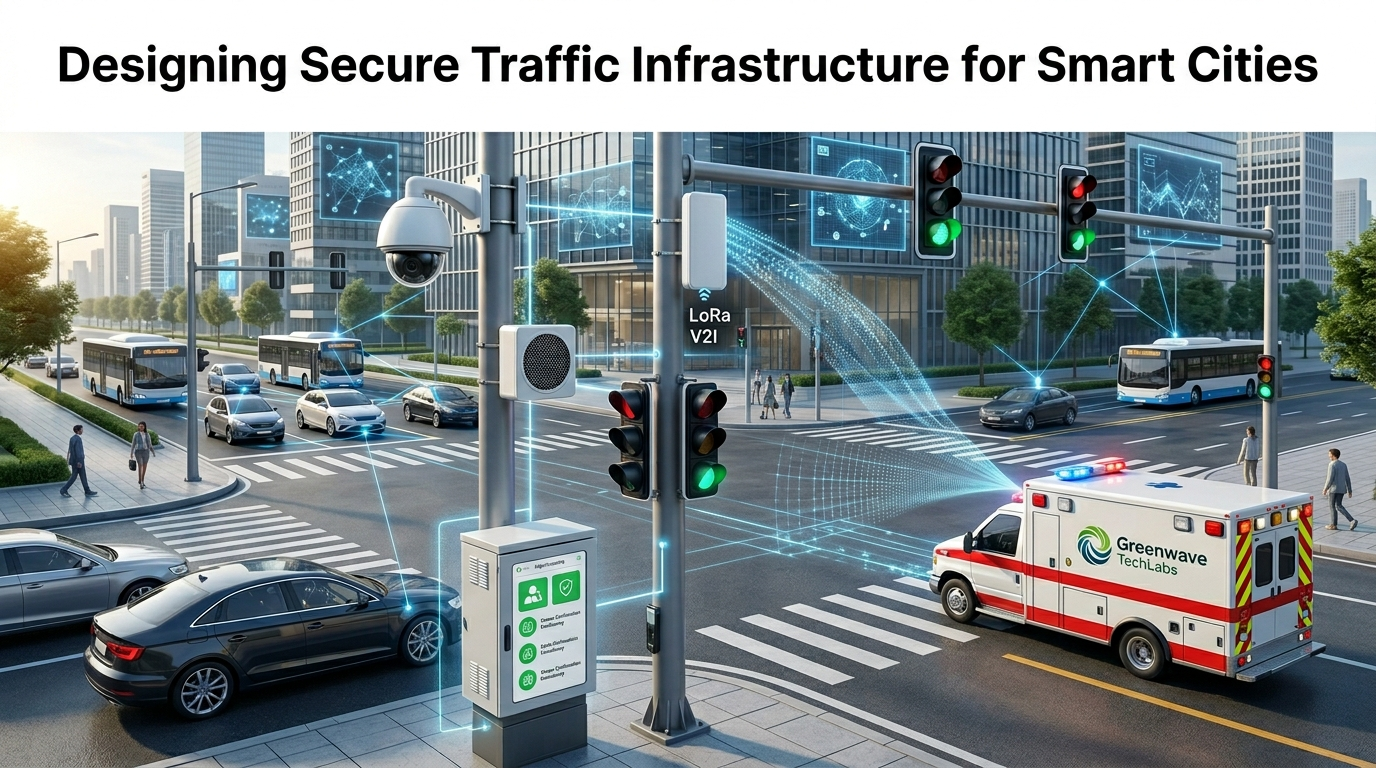
As cities become increasingly connected, traffic infrastructure is evolving from static hardware into intelligent digital systems capable of making real-time decisions. Modern intersections now integrate AI-based detection, wireless communication, cloud coordination, edge computing, and adaptive signal control.
But greater connectivity introduces a new challenge: security. A compromised traffic system is no longer just an operational issue — it becomes a public safety risk.
According to Cybersecurity and Infrastructure Security Agency, transportation infrastructure is considered critical infrastructure and requires strong cybersecurity protection against malicious interference and unauthorized access.
Vulnerabilities in Traditional Systems
Traditional emergency traffic systems often depend on unsecured radio communication, isolated sensors, static control logic, and limited authentication mechanisms. These weaknesses create vulnerabilities such as false signal triggering, spoofed emergency requests, replay attacks, unauthorized access, and traffic disruption.
Our Layered Security Architecture
At Greenwave TechLabs, security was treated as a core engineering requirement from the beginning of system design. Our framework addresses these risks using a layered security architecture that combines:
- Authenticated LoRa V2I communication
- Timestamp verification
- HMAC-based packet validation
- Multi-modal detection redundancy
- Distributed edge intelligence
Four-Layer Validation
The architecture validates device authenticity, packet integrity, timestamp freshness, and sensor confirmation consistency — significantly reducing the probability of malicious traffic manipulation.
Resilience Under Failure
Modern smart-city infrastructure must also remain resilient under failure conditions — continuing to operate during network instability, sensor degradation, environmental disruption, and cyberattack attempts. This is why our architecture uses redundant sensing modalities: secure V2I communication, acoustic siren detection, and visual confirmation.
According to NIST Cybersecurity Framework, resilient infrastructure systems require continuous verification, layered protection, fail-safe design, and risk-aware architecture. These principles are becoming increasingly important as cities deploy autonomous mobility systems, connected traffic corridors, intelligent intersections, and smart emergency networks.
Security is no longer an optional layer. It is part of the infrastructure itself.