1
Vehicle unit
Sits in the ambulance and shares its position while the emergency is on.
A week at a live Chennai junction with Greater Chennai Traffic Police: from the first pole going up to a demonstration for the Deputy Commissioner of Police (Traffic).
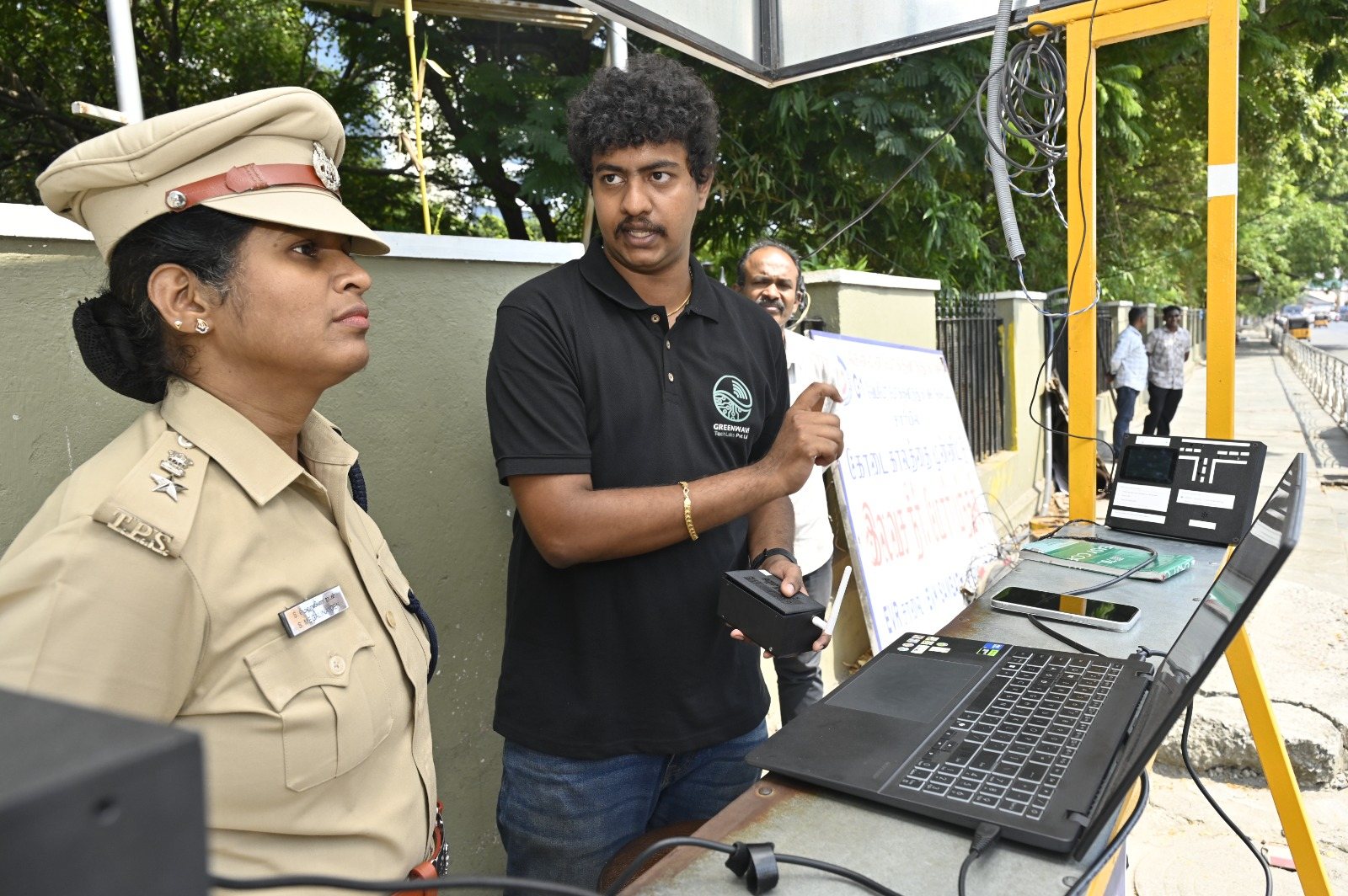
Source: Chennai field demonstration, 28–31 October 2026
An ambulance reaches a junction and the officer on duty often has no warning. Priority One tells the officer which road it is coming from and how soon, so they can clear the way.
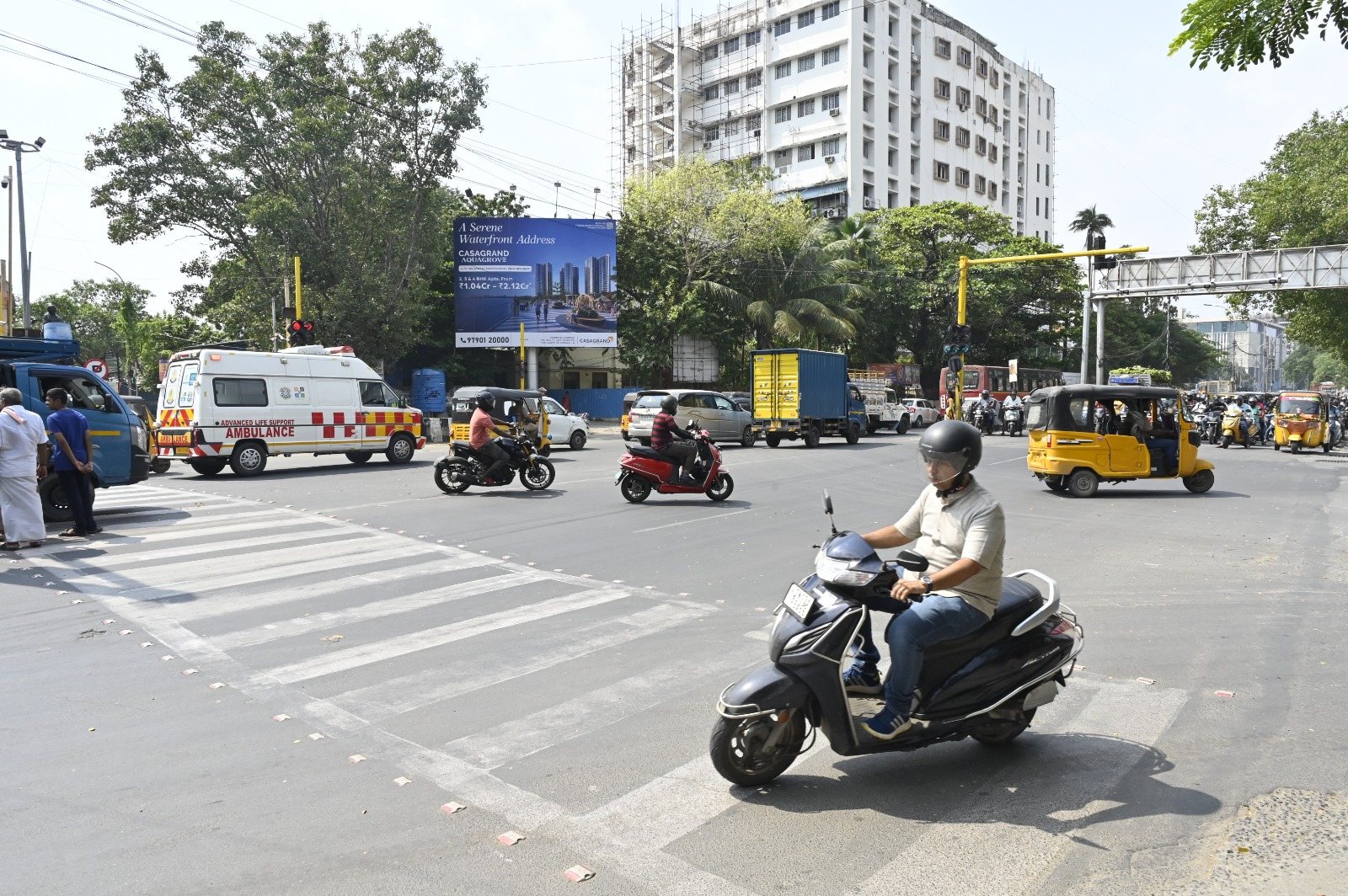
Greater Chennai Traffic Police approved a field demonstration on 20 October 2026. We set up at a live T-junction, tested with our own vehicle, and on 31 October ran a police ambulance in front of the Deputy Commissioner of Police (Traffic), Tmt. S. Megalina Iden. All five approaches were alerted on the correct road, 284 to 347 metres out.
Everything ran on hand-built prototype units in a temporary set-up. The results are a starting point, not the limit.
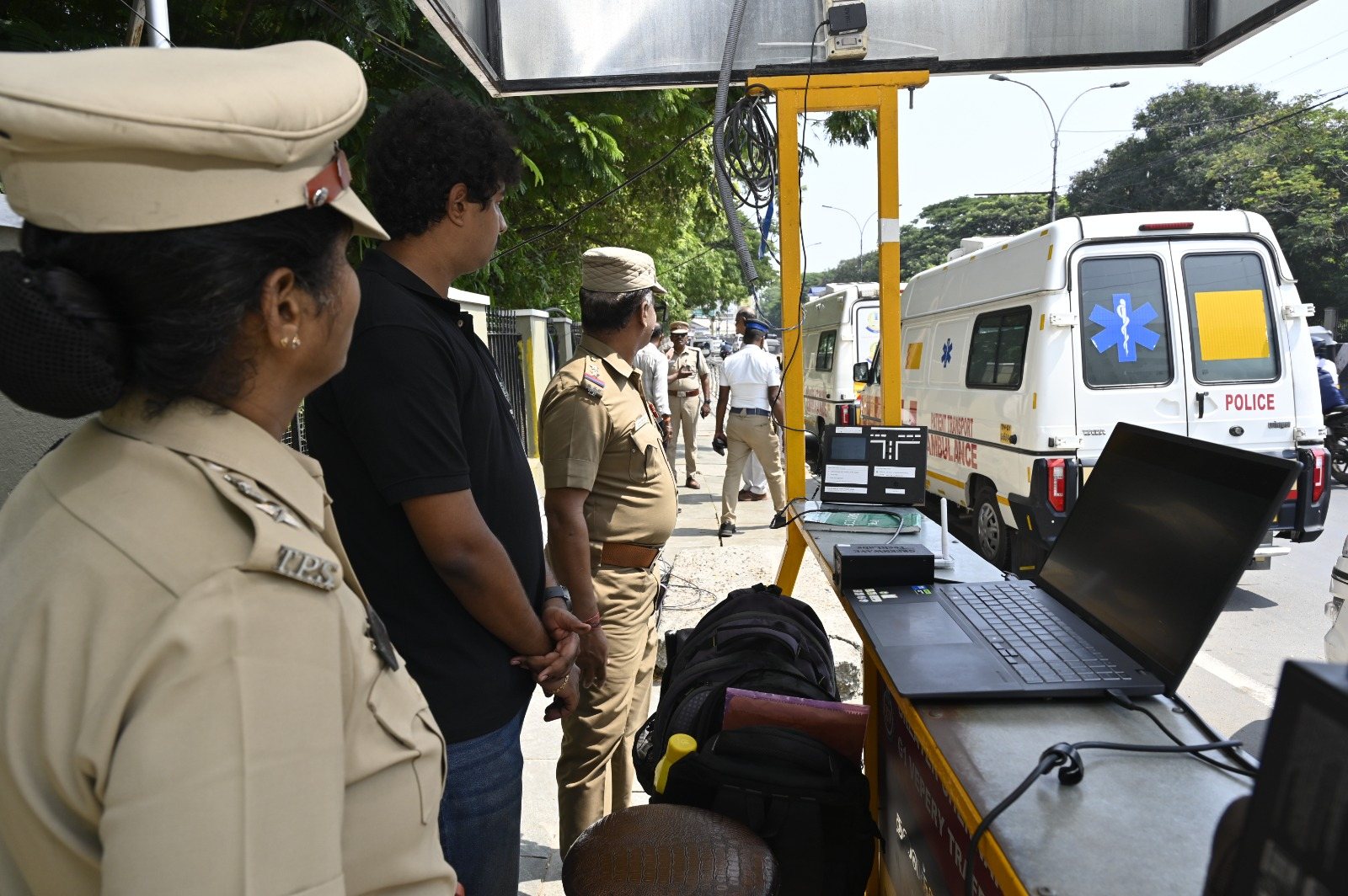
Four parts, working together. The system advises the officer; the officer decides and acts.
Sits in the ambulance and shares its position while the emergency is on.
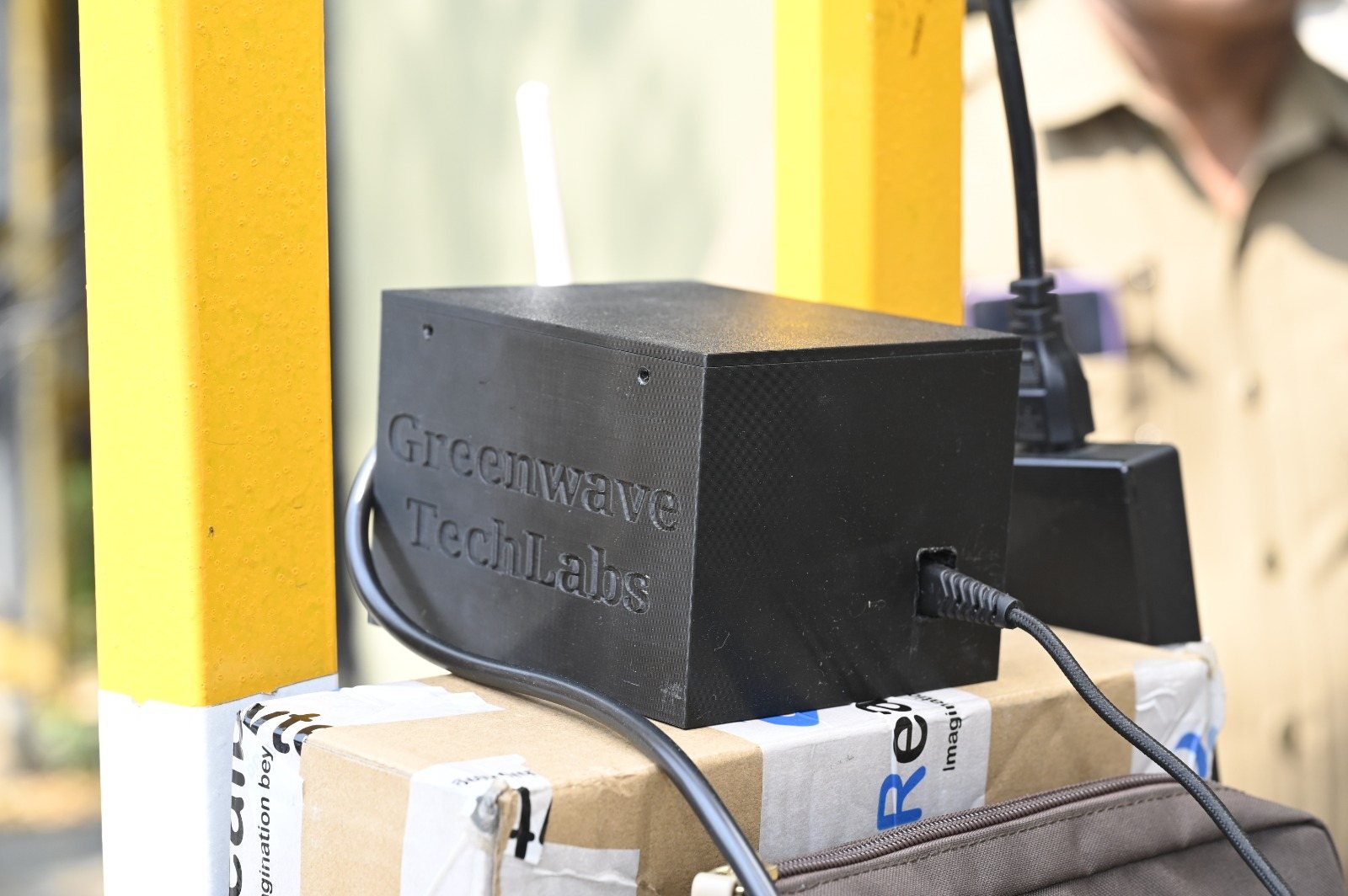
Fixed on poles on every road. They check the message, pass it on, and also listen for sirens.
Works out which road the ambulance is on and how urgent it is.
At the kiosk. It beeps, lights the road on a map, and the officer taps once to acknowledge.
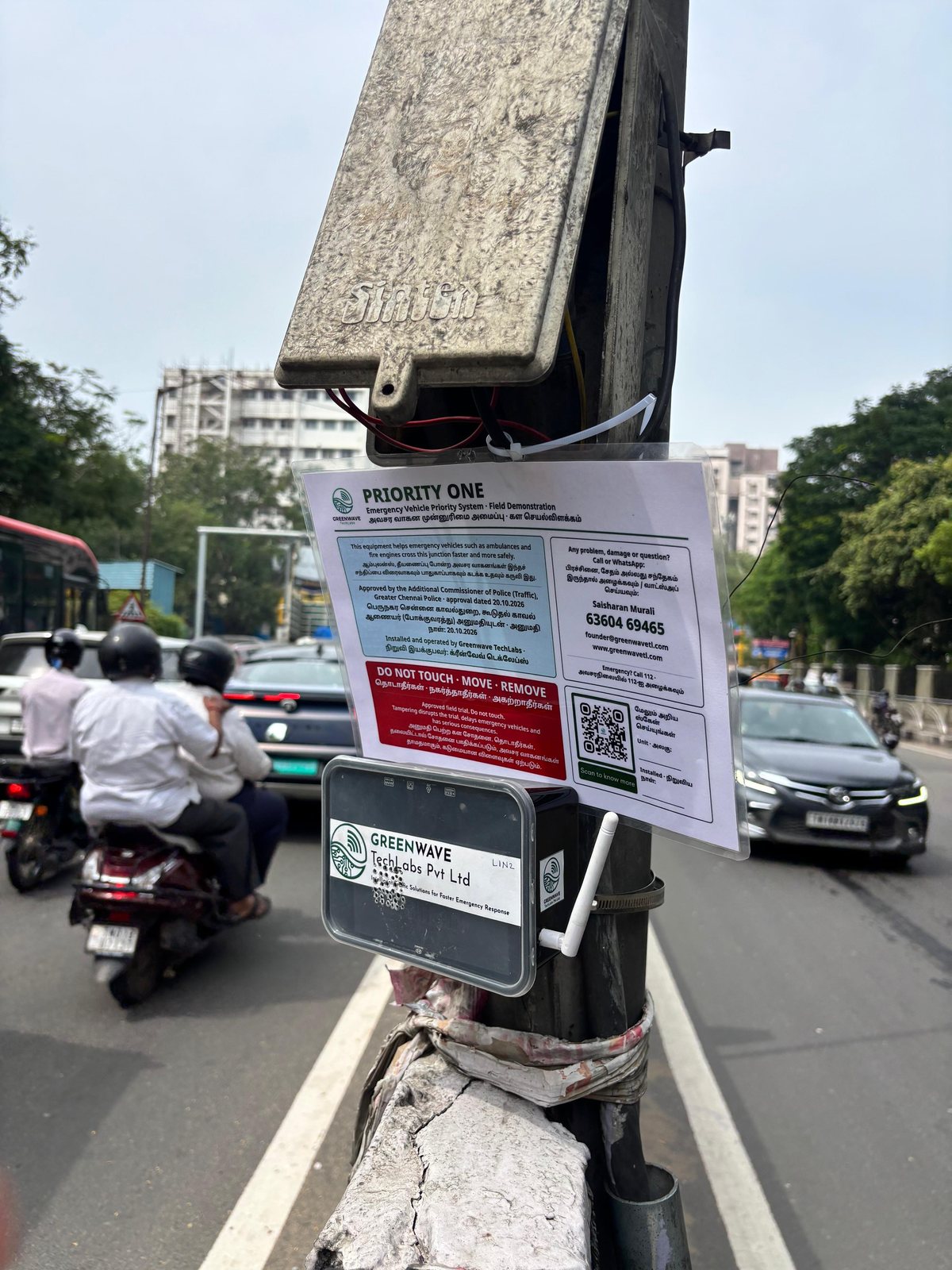
Two roadside units on each of the three roads: a far one and a near one. The console alerted the officer before the ambulance reached the first of them on every run.
| Road | Far unit | Near unit |
|---|---|---|
| Road 1 · Left | 174 m | 69 m |
| Road 2 · Right | 175 m | 97 m |
| Road 3 · Bottom | 206 m | 113 m |
| Situation | Times | Result |
|---|---|---|
| Ambulance with our unit approaching | 13 | 13 of 13 alerted, on the correct road |
| A fast approach (65 km/h) | 1 | Alerted 224 m out |
| Ambulance stopped in a queue near the junction | 3 | Alert held until it passed or the emergency was switched off |
| Ambulance leaving, parked or turning | 20+ | No alert, as it should be |
| Horns, traffic noise and siren-like sounds | 150+ | No false alert |
| Real ambulances without our unit (siren only) | 6 | Early warning, though some quiet sirens were missed |
| Road 3 (side road) | 2 | Not detected with one unit; a second unit has since been fitted |
Every roadside unit also listens for sirens. The console is alerted only when both units on a road hear one, and the alert is an early warning without the buzzer. It comes later than an alert from the vehicle unit, and quiet sirens can be missed. Sound is the backup; the vehicle unit is the main method.
Source: Chennai field demonstration, 28–31 October 2026.
The roadside units were fixed on poles on each road, with a notice asking people not to touch them.
We want to be straightforward about how far these results go.
Officers asked for warning from the previous junction, the whole corridor, better siren detection and a finished system. This is how we plan to deliver it.
A corridor from Ega Theatre to Rajiv Gandhi Government General Hospital, about 4 km and 8 junctions, is under discussion with Greater Chennai Traffic Police.
Finished circuit-board units, now in design, fixed 4–5 m up on signal poles with solar or mains power and battery backup.
Junction-to-junction warning, with units mounted higher and better siren detection.
The complete system on two or three junctions in a row, subject to sponsorship.
In one week, with prototype hardware, Priority One showed that a traffic officer in Chennai can know which road an ambulance is coming from about half a minute before it arrives, reliably and without false alarms.
Chennai Field Demonstration Report, October 2026
The full report, with every test run, the junction map, the officers’ feedback and the police correspondence, is available on request.